




Now Reading: Mansour Al Obaikan: From Financial Risk to Executive Leadership
-
01
Mansour Al Obaikan: From Financial Risk to Executive Leadership
Mansour Al Obaikan: From Financial Risk to Executive Leadership
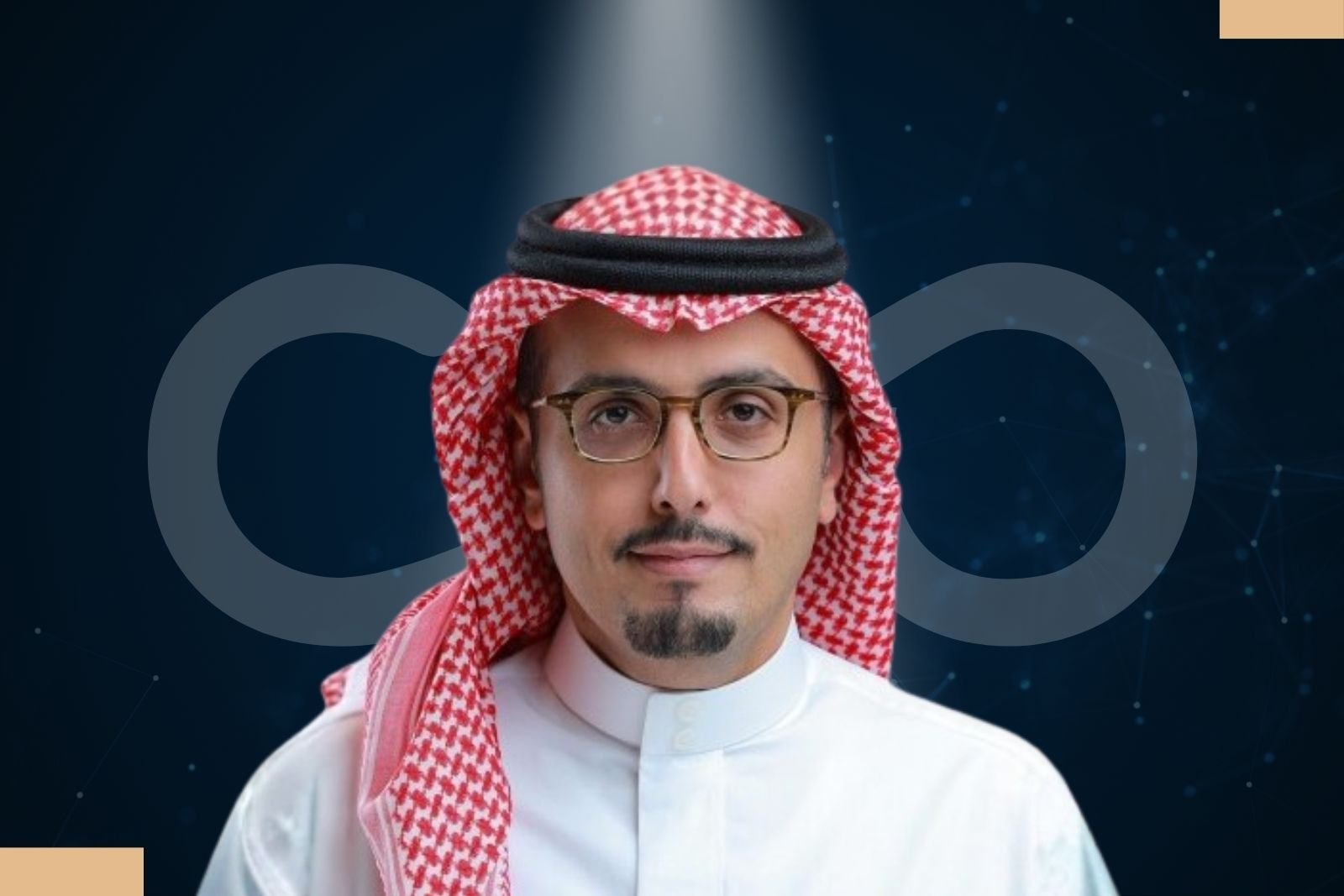
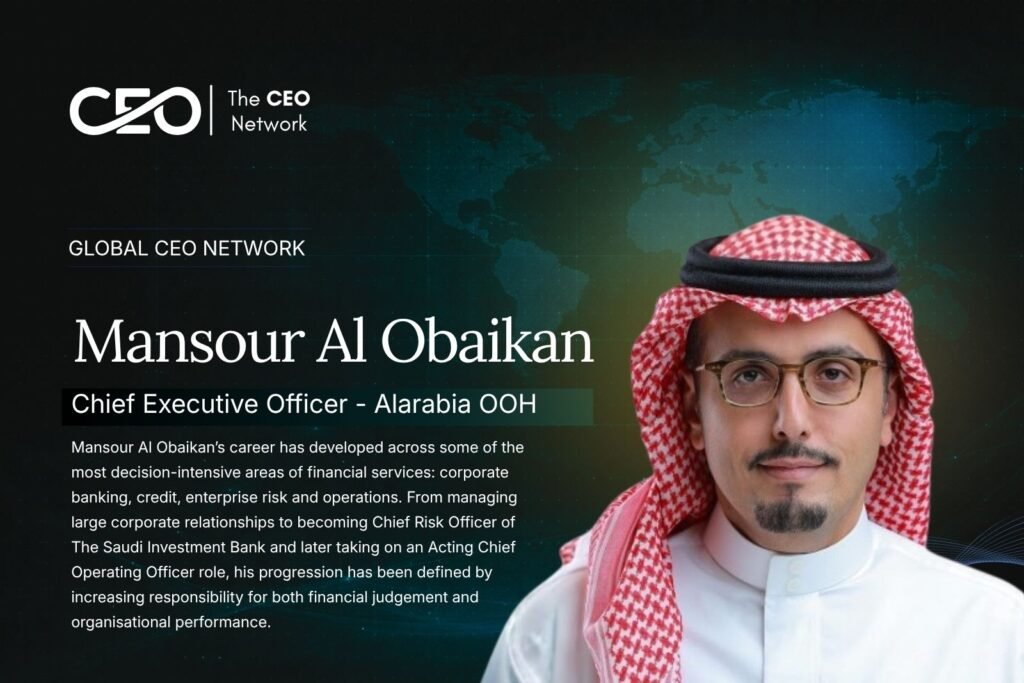
Mansour Al Obaikan’s career has developed across some of the most decision-intensive areas of financial services: corporate banking, credit, enterprise risk and operations. From managing large corporate relationships to becoming Chief Risk Officer of The Saudi Investment Bank and later taking on an Acting Chief Operating Officer role, his progression has been defined by increasing responsibility for both financial judgement and organisational performance.
Today, as Chief Executive Officer of Alarabia OOH, Al Obaikan brings that experience into a different leadership environment. His career provides a useful perspective on how expertise in risk, credit and institutional governance can develop into a broader executive discipline.
Learning the Business Through Corporate Banking
Al Obaikan began his professional career at SABB, joining its Junior Officer Development Program in 2007 after completing his finance degree at Prince Sultan University.
His early years were spent in corporate banking, progressing from trainee officer to Relationship Manager and then Senior Relationship Manager. He worked with businesses across different sectors and managed relationships involving companies with annual sales ranging from SAR 100 million to more than SAR 500 million.
The work required more than relationship management. It involved assessing financial positions, preparing credit proposals, developing new relationships and understanding the commercial requirements of businesses across sectors including manufacturing, contracting, investment, telecommunications, transportation and utilities.
This early exposure placed financial analysis and commercial judgement at the centre of his professional development.
Moving Towards Larger and More Complex Decisions
Al Obaikan subsequently moved into leadership positions within large corporate banking.
As Team Leader and later Division Head of Large Corporate Banking, he managed teams responsible for substantial corporate portfolios. His responsibilities included setting strategies and projections, managing financial and non-financial targets, developing teams and maintaining the quality of the bank’s credit exposure.
The experience also expanded his leadership responsibilities. He was no longer focused solely on individual client relationships, but on creating the conditions for teams of relationship managers and support staff to perform effectively.
Coaching and developing junior professionals became a recurring part of his responsibilities, alongside commercial performance and credit quality.
The transition from managing relationships to managing institutions begins when individual decisions become part of a wider system of accountability.
Building a Career Around Risk
In 2018, Al Obaikan moved into credit risk leadership at The Saudi Investment Bank, first as Deputy AGM for Credit Risk before becoming Deputy Chief Risk Officer and ultimately Chief Risk Officer in December 2019.
The move represented a significant change in perspective.
Corporate banking involves understanding individual businesses and their financing requirements. Risk leadership requires looking across a much wider portfolio and considering how credit decisions, capital, governance and risk controls interact across an institution.
As Chief Risk Officer, Al Obaikan spent more than five years in the role, developing an executive career centred on risk management and institutional resilience.
His professional qualifications also reflect this focus, including programmes in risk management in banking, bank capital adequacy under Basel III and a Chief Risk Officer programme.
Expanding Into Operations
An important dimension of Al Obaikan’s experience came in 2023, when he served as Acting Chief Operating Officer of The Saudi Investment Bank alongside his broader executive trajectory.
The move into operations broadened the scope of his experience beyond risk. It placed him closer to the systems, processes and organisational capabilities required to translate strategy into execution.
That combination of risk and operations is particularly relevant at senior executive level. Risk management establishes boundaries for decision-making, while operations determine how effectively an organisation functions within those boundaries.
His subsequent board and committee responsibilities have added another governance dimension, including service as a Board Member of American Express Saudi Arabia and committee roles at Alistithmar Capital.
Leadership Through Risk and Governance
Across his career, risk has not been an isolated technical discipline. It has been connected to credit quality, commercial decision-making, governance and organisational performance.
His experience on risk committees and security valuation committees has provided exposure to decision-making at board and committee level, complementing his earlier experience managing corporate portfolios and later leading enterprise risk.
This progression illustrates how financial leadership increasingly depends on understanding the relationship between growth and control.
Sustainable growth requires executives to understand not only where an organisation can go, but also the risks and capabilities that determine how it gets there.
Taking the Experience Into CEO Leadership
In June 2025, Al Obaikan became Chief Executive Officer of Alarabia OOH.
The move represents a new stage in his career. After years in banking, where decisions were closely connected to capital, credit and risk, he now leads an organisation from the CEO position.
His background provides a foundation built around financial discipline, stakeholder management, strategic planning and organisational leadership. At the same time, the transition into a CEO role requires applying those capabilities across the broader responsibilities of an enterprise.
The shift is significant because executive leadership is ultimately broader than any individual function. Finance, risk, operations, people and strategy need to work together around a common direction.
Developing Leaders Along the Way
People development has remained a consistent element throughout Al Obaikan’s career.
His corporate banking leadership roles involved supervising relationship managers and support teams, while his responsibilities included coaching and grooming junior professionals. That experience continued to inform his progression into senior management and executive roles.
Leadership development is particularly important in environments where decision quality depends on the judgement of people across multiple levels of an organisation. Building that capability is therefore part of the executive responsibility rather than a separate human resources function.
A Career Built on Increasing Scope
Mansour Al Obaikan’s professional journey demonstrates a progression from financial analysis and corporate relationships to portfolio leadership, enterprise risk, operations, governance and ultimately CEO responsibility.
The underlying theme is increasing scope.
Each stage has required him to consider a wider set of variables, from individual corporate relationships to large banking portfolios, institutional risk and operational performance. His current role provides the opportunity to apply that accumulated experience from the broader perspective of the chief executive.
Recognition by The CEO Network
Mansour Al Obaikan’s career reflects the changing nature of executive leadership in complex organisations. His experience across corporate banking, credit, enterprise risk, operations, board committees and executive management provides a multidimensional foundation for his current role as CEO of Alarabia OOH.
Rather than following a single functional path, his career has expanded progressively from financial decision-making into broader organisational responsibility. That progression offers a clear example of how expertise in one discipline can become a foundation for enterprise-level leadership when combined with wider exposure to governance, operations and people.