


















Now Reading: Beyond the Blockade: How Saudi Aramco is Rewriting Global Energy Resiliency
-
01
Beyond the Blockade: How Saudi Aramco is Rewriting Global Energy Resiliency
Beyond the Blockade: How Saudi Aramco is Rewriting Global Energy Resiliency
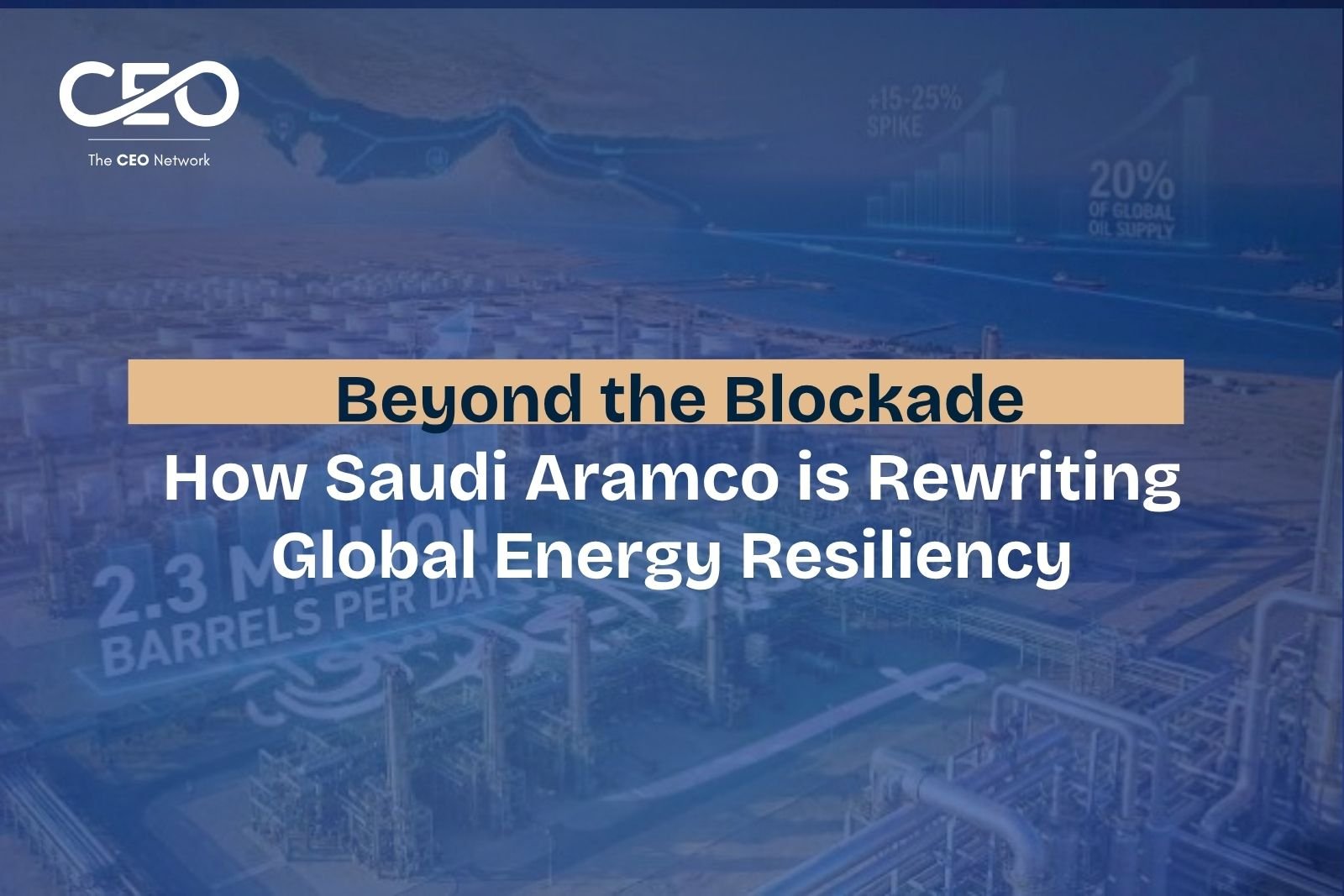
For the global executive ecosystem, the standard playbook for state-backed enterprise has been completely rewritten over the past 48 hours. In a series of high-profile, high-stakes declarations following severe regional maritime bottlenecks, Saudi Aramco President and CEO Amin Nasser has laid down a new corporate mandate.
Faced with an ongoing structural squeeze on traditional shipping corridors, Nasser has unveiled a dual-track strategy built to insulate global enterprise from volatile supply chain shocks while executing a massive infrastructure and technology-driven capital expenditure program.
For members of The CEO Network, Nasser’s mid-2026 blueprint signals a permanent structural pivot for Gulf conglomerates: The Zero-Buffer Zone Strategy and Decentralized Energy Logistics.
1. Navigating the “Zero-Buffer Zone”
During a critical enterprise briefing on Saudi Aramco’s first-quarter performance metrics, Amin Nasser addressed the elephant in the global boardroom: the depletion of Western emergency crude inventories.
- The Squeeze on Physical Supply: Nasser issued a stark warning that the global energy market has entered a “Zero-Buffer Zone.” With global trade routes constrained, traditional oil stocks are facing unprecedented drawdowns, shifting corporate risk from simple price volatility to actual physical asset shortages.
- The Post-Crisis Normal: Sending a shockwave through corporate IT and procurement departments, Nasser stated flatly that even if major trade bottlenecks were to open tomorrow, the global market would not fully rebalance until 2027. The baseline takeaway for the C-suite is clear: stop waiting for a return to the old logistical baseline.
2. Bypassing Maritime Chokepoints: The Overland Redirection
With traditional maritime transit heavily restricted by regional friction, corporate clients have raised supply chain reliability to their number-one operational concern. Nasser’s solution is an aggressive capital pivot toward overland and multi-coast distribution.
                  ARAMCO'S MACRO DISTRIBUTION RESILIENCE

  [Legacy Routing]   ──► Heavily Bottlenecked Strait Routes (Delays & Cost Spikes)
                                       │
                                       ▼ (Infrastructure Overhaul)
  [Overland Pivot]   ──► East-West Pipeline Maximization
                     ──► Direct Industrial Terminal Links
                     ──► Red Sea Logistics Centers Safeguarding Asian/European Flows
Instead of relying purely on standard regional sea lanes, Aramco has maximized throughput across its extensive domestic overland infrastructure network. By diverting massive data-monitored volumes directly to alternative ports along the Red Sea coast, Nasser is providing global enterprise clients with an uninterrupted, risk-mitigated supply line to keep global manufacturing networks operational.
3. “Built In, Not Bolted On”: Predictive Automation at the Wellhead
Perhaps the most significant takeaway for C-suite operators looking to justify their technical transformation budgets is Aramco’s highly practical deployment of artificial intelligence. Nasser has consistently challenged the corporate trend of generic tech adaptation, demonstrating that industrial AI must deliver hard operational returns.
The company has accelerated the rollout of advanced autonomous edge computing systems across its entire production footprint:
Rather than utilizing AI software merely for desktop analysis or corporate reporting, Aramco has integrated predictive AI modeling directly into its extraction and logistics systems. These autonomous frameworks monitor downhole conditions, optimize pipeline pressures, and prevent equipment downtime before it happens—slashing unplanned operational shutdowns by up to 50% without requiring constant human intervention.
The CEO Verdict: Resilience is Priceless
Amin Nasser’s operational playbook leaves no room for ambiguity: the era of the passive, single-route commodity supplier is dead. As Saudi Aramco transforms into an agile, highly automated logistics and energy giant, the competitive advantage belongs to leaders who treat global supply chain friction not as a temporary hurdle, but as a permanent variable to design around.
The Immediate Executive Query: Is your leadership team still treating supply chain diversification as a multi-year goal, or are you executing immediate infrastructure overrides to protect your enterprise from systemic global blockades?