














Now Reading: Beyond the Numbers: How the CFO Shapes the Future of the Company
-
01
Beyond the Numbers: How the CFO Shapes the Future of the Company
Beyond the Numbers: How the CFO Shapes the Future of the Company
Introduction
For decades, the role of the Chief Financial Officer (CFO) was narrowly defined: reporting, compliance, budgeting, and closing the books.
That definition is no longer sufficient.
Over more than twenty years working across both the Gulf and Egyptian markets within banks, large organizations, and fast-growing companies , one reality became clear: the CFO is no longer a supporting function. The CFO has become one of the most influential architects of a company’s future, capable of enabling sustainable growth or quietly steering the organization toward failure.
I have seen companies with strong products and growing revenues struggle, not because their ideas were weak, but because financial thinking failed to keep pace with strategic decisions and cash-flow realities.
The CFO: Strategic Risk or Strategic Advantage?
Companies rarely fail overnight.
Failure is usually the result of accumulated small mistakes such as:
- Poor cash-flow management and a weak link between growth and liquidity
- Short-term decisions that favor accounting results over sustainability
- Ignoring early warning signals
At the center of these decisions sits the CFO.
I recall a board meeting where the numbers looked reassuring on paper, yet cash flows were telling a completely different story.
The difference was not revenue , it was the decision.
A CFO who focuses only on historical figures becomes a financial reporter.
A CFO who thinks analytically, strategically, and forward-looking becomes a value creator.

From an Accounting Mindset to an Analytical Mindset
Accounting answers one question:
What happened?
True financial leadership asks a more important one:
Why did it happen , and what does it mean for what comes next?
An effective CFO does not treat numbers as historical records.
They treat them as tools for understanding, forecasting, and decision-making.
This analytical mindset requires:
- Focusing on cash flow, not profit alone
- Understanding unit economics, not just overall margins
- Building scenarios instead of relying on static budgets
- Measuring performance drivers, not outcomes only
Years of working deeply in financial analysis taught me that the worst-case scenario rarely arrives suddenly , it becomes visible early to those who know where to look.
FP&A: The Compass of Decision-Making
At the heart of this analytical mindset lies Financial Planning & Analysis (FP&A).
FP&A is not an additional reporting layer.
It is the decision intelligence system of the organization.
A CFO who truly understands FP&A can:
- Anticipate risks before they appear in financial statements
- Test strategic decisions before execution
- Align operational performance with long-term vision
- Support the board with insight driven by data, not assumptions
Organizations that neglect FP&A do not suffer from a lack of data,
they suffer from a lack of foresight.
The CFO and the Board: A Role That Requires Courage and Clarity
Boards do not need more numbers.
They need clarity, context, and confidence in the quality of information.
The CFO sits at the intersection of:
- Executive ambition
- Operational reality
- Shareholder and investor expectations
Through working closely with boards, banks, and investors, I learned that:
- A CFO who seeks to please the board weakens governance
- A CFO who seeks to inform the board strengthens the entire organization

The CFO as the Real Risk Leader
From my experience, the CFO is often the first to see risks before they turn into crises.
Not because the CFO is pessimistic, but because they are closest to data, cash flow, and untested assumptions.
Strong CFOs do not wait for risks to appear in financial statements.
They identify them early through:
- Deep analysis
- Scenario modeling
- Stress testing
In many organizations, the CFO is the real Chief Risk Officer , whether or not the title exists.
Investors are not looking for risk-free companies.
They are looking for companies that understand their risks and manage them intelligently.
Investors Do Not Buy the Past — They Buy the Future
Historical performance matters, but it is not the investment decision.
Investors do not buy what the company used to be.
They buy a credible future story supported by numbers that can withstand scrutiny.
Past performance answers one question:
Was the company able to operate?
Investment decisions are driven by a far more critical one:
Is this company capable of scaling and creating future value?
This is where the CFO’s role becomes decisive , translating vision into financial logic, future scenarios, and clearly understood risks.
The CEO–CFO Relationship: Balancing Ambition and Reality
The CEO sees opportunity and growth.
The CFO sees constraints, liquidity, and risk.
When this relationship turns into a power struggle, the company loses.
When it becomes a partnership built on data and mutual respect, companies become scalable and investable.
The best CEO–CFO relationship is not a tug of war
it is a shared vision tested by numbers.
Building Investable and Scalable Companies
Through working with companies at different stages of growth, I observed that investment readiness rarely collapses because of weak revenue
it collapses because control is lost.
An investable company is not defined by revenue size alone, but by:
- Financial clarity
- Strong cash-flow discipline
- Governance and internal controls
- Scalable systems and processes
- The ability to operate beyond individuals
Growth without financial discipline creates fragility.
Discipline without scalability creates stagnation.

Digital Transformation: Investors Do Not Buy ERP — They Buy Risk Mitigation
Technology does not create trust.
Trust is created when numbers reflect reality.
I have seen companies with advanced systems that still make decisions based on intuition rather than data.
Investors do not care about system names or costs.
They care about outcomes:
- Is the data accurate?
- Are risks mitigated?
- Are decisions faster and more reliable?
Automating chaos does not make a company investable.
True digital transformation is a CFO responsibility , not merely an IT project.
Financial Culture Inside the Organization
The CFO does not manage numbers alone.
The CFO shapes the financial culture of the organization.
When non-financial leaders understand how their decisions impact cash flow and risk, decision quality improves across all levels.
Investable companies are not only financially disciplined ,
they are financially aware.

Timing: The Right Decision at the Right Moment
From my experience, poor financial decisions are rarely caused by lack of information.
They are caused by poor timing.
The right decision at the wrong time can destroy value.
A balanced decision at the right time can save the company.
This is where the CFO’s role shifts from protecting numbers to protecting timing.
Final Reflection
The CFO does not protect the past.
The CFO protects the future.
Perhaps the most important question a company should ask today is not:
Are our numbers good?
But:
Does our CFO see what is coming next?
About the Author
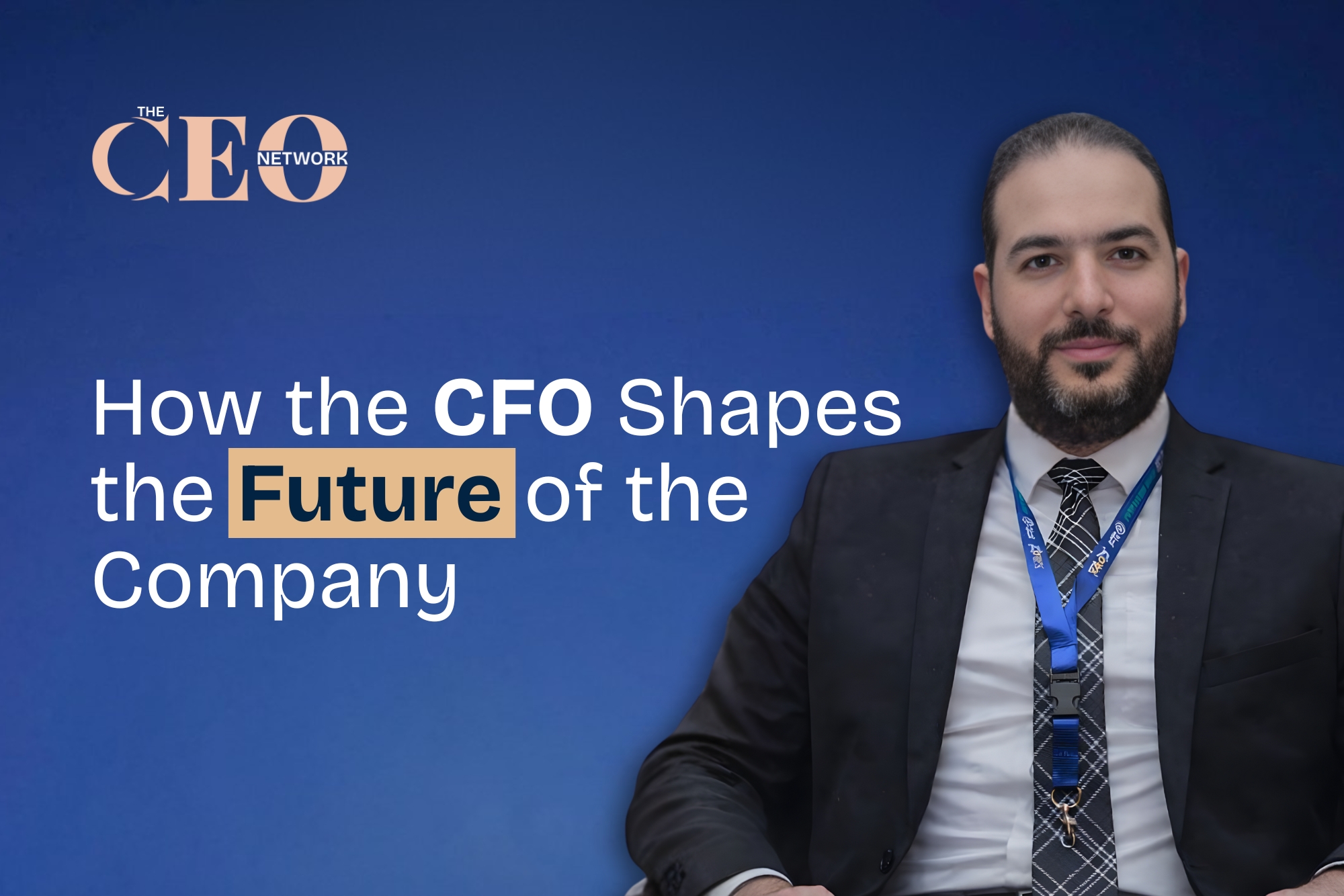
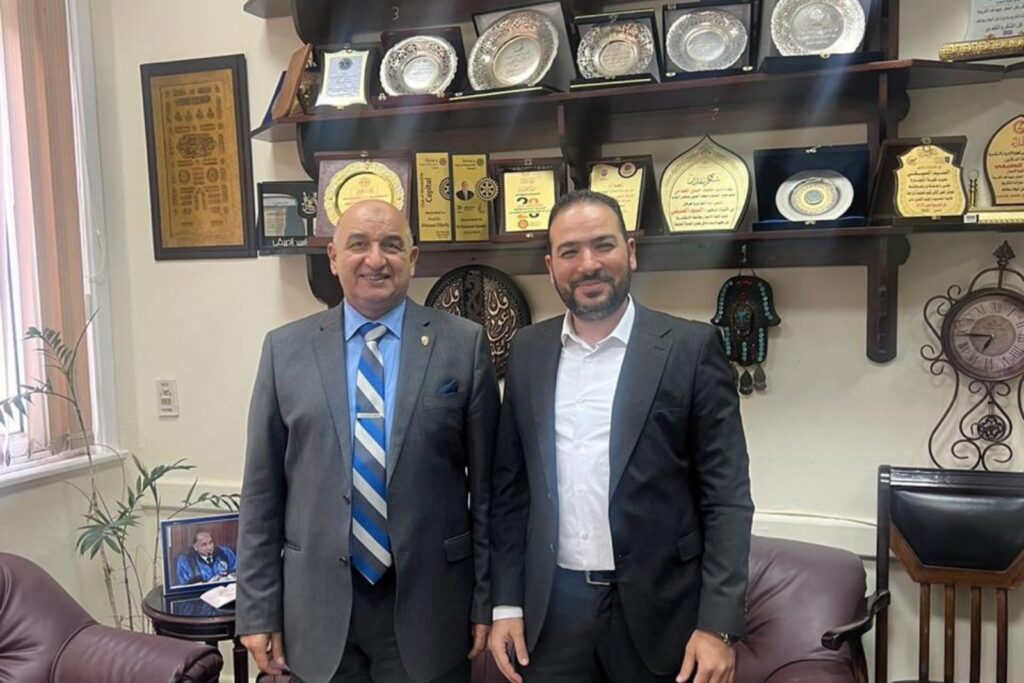
Dr. Mohamed Adel Badawy is a finance and strategy professional with over 20 years of experience across the GCC and Egyptian markets. He has worked with banks, large corporate groups, and fast-growing companies, supporting them through financial restructuring, governance enhancement, valuation, and investment readiness. His work focuses on helping founders and leadership teams move beyond short-term growth toward building scalable, credible, and investable organizations.
In parallel, he serves as an executive-level trainer and lecturer in MBA and DBA programs, bridging real-world business challenges with practical financial thinking.