


Now Reading: Ibrahim Alrashid: Transforming Institutions Through Technology, Finance and Strategic Leadership
-
01
Ibrahim Alrashid: Transforming Institutions Through Technology, Finance and Strategic Leadership
Ibrahim Alrashid: Transforming Institutions Through Technology, Finance and Strategic Leadership
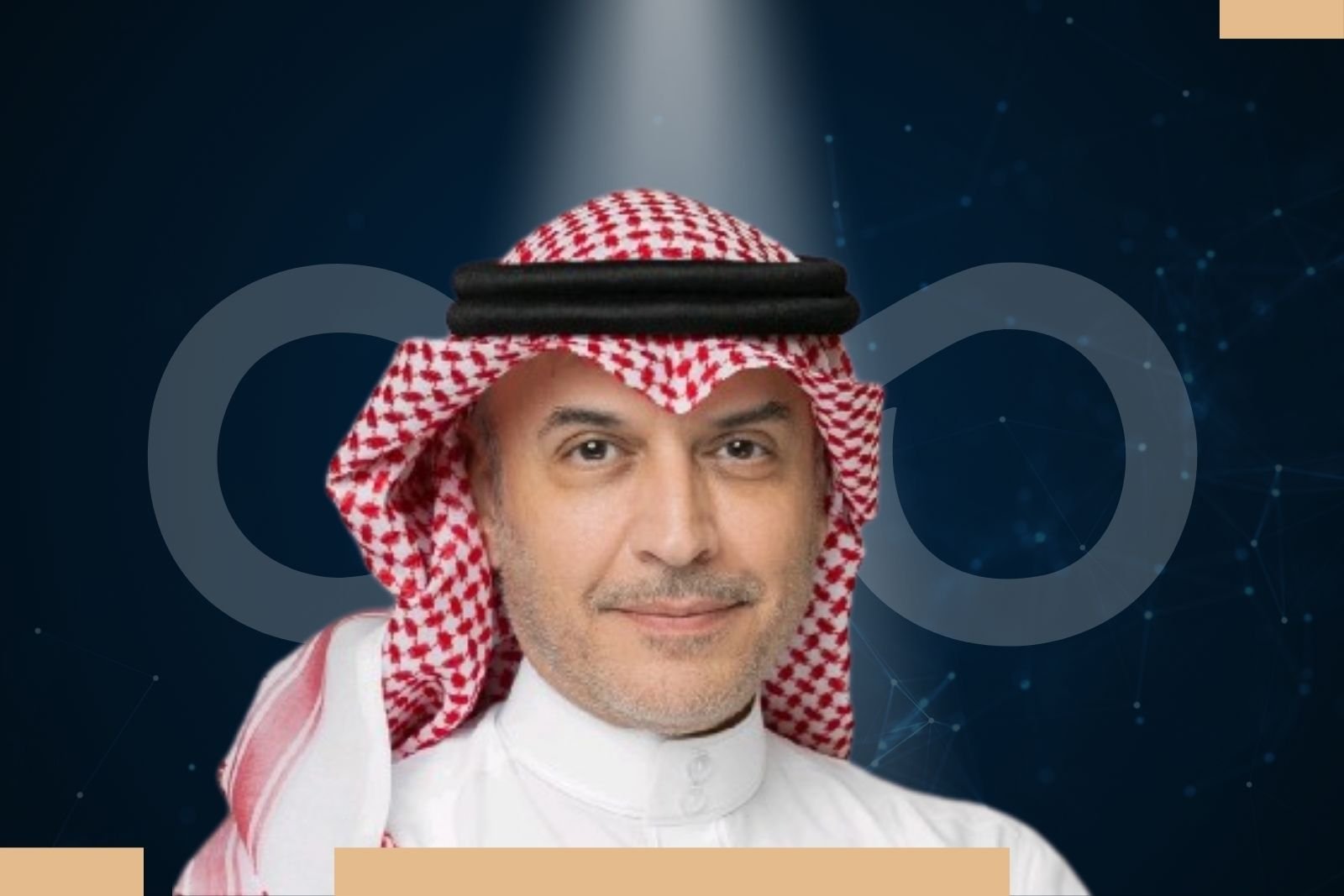
Leadership across finance, technology and government rarely follows a single discipline. It requires the ability to understand systems, recognise institutional opportunities and translate strategy into outcomes that can operate at scale.
Ibrahim Alrashid has built his career at that intersection.
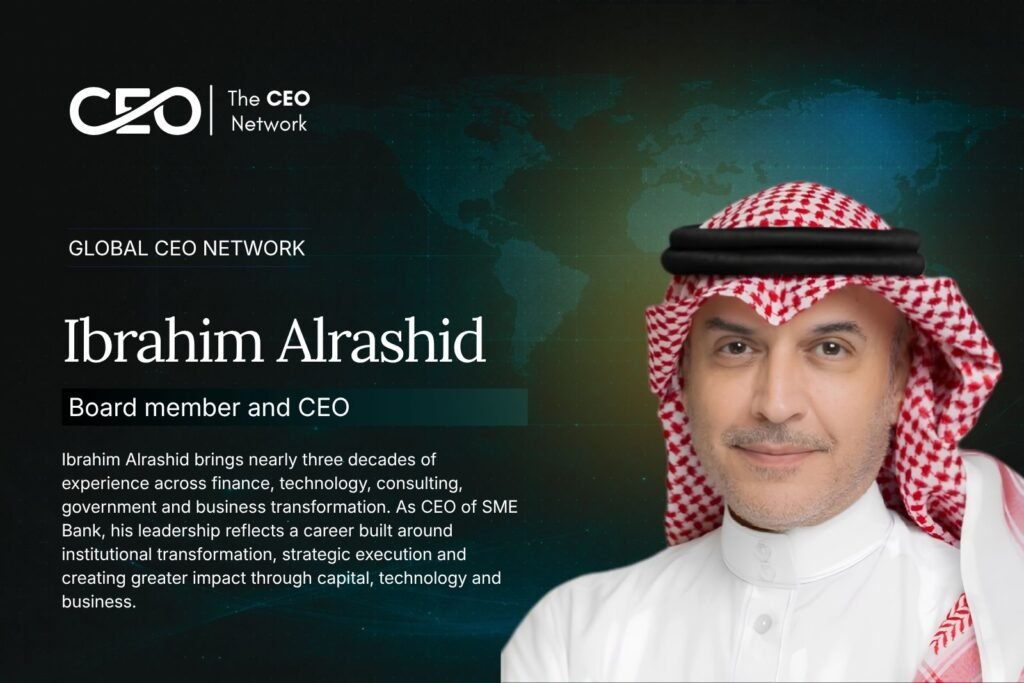
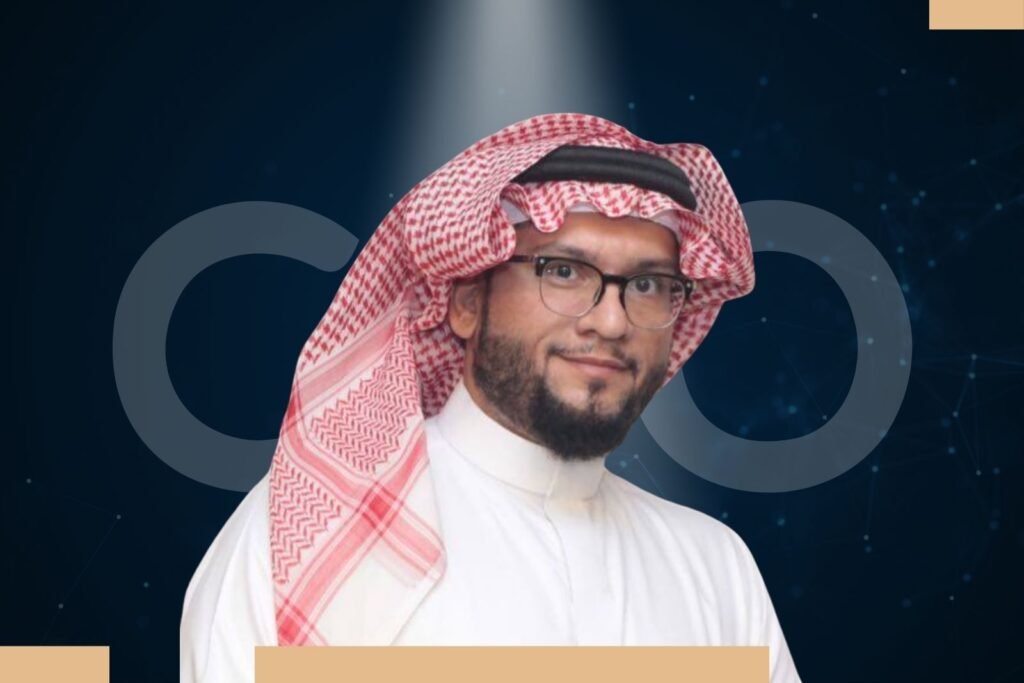
With 28 years of experience spanning business and transformation, his professional journey has moved through financial services, consulting, government programmes, technology leadership, professional services and entrepreneurship. Today, as Chief Executive Officer of SME Bank, he brings together those experiences in a role focused on one of Saudi Arabia’s important areas of economic development: supporting the growth of small and medium-sized enterprises.
His career demonstrates how technology, finance and institutional transformation can become interconnected rather than separate executive functions.
From Technology to Institutional Leadership
Alrashid’s career has never been confined to one professional lane.
At Al Rajhi Bank, he progressed through roles including Head of Business Relationship Management, Head of IT Solutions & Development and Chief Information Officer. As CIO, he was responsible for leading technology at what the profile describes as the largest bank in the Middle East at the time.
That experience provided exposure to technology not simply as an operational function, but as an enabler of large-scale business activity.
Earlier, he had worked within Saudi Arabia’s eGovernment programme as Director of the eGovernment Centre, adding a public-sector dimension to his understanding of digital transformation.
The combination is significant. Technology leadership within a major financial institution demands reliability, commercial understanding and delivery discipline. Government transformation introduces another layer, where systems must serve wider institutional objectives and public needs.
Together, these experiences helped establish the broad perspective that would later define his executive career.
Transformation becomes meaningful when technology changes what an institution is capable of achieving.
Building a Career Around Transformation
Following his technology leadership experience, Alrashid moved into broader business and executive responsibilities.
At TakaMoL Holding, he served as Vice President, while also taking on the role of CEO at Rawafid, a business specialising in manpower and professional services. The Rawafid portfolio included several customers with annual revenues exceeding M100 million, while the company had a stated plan to focus on supporting Saudi Vision 2030.
These roles marked an important expansion beyond technology.
The executive challenge becomes different when responsibility extends to an entire business. Strategy must be connected to customers, commercial performance, people and execution. Technology remains valuable, but it becomes one component within a larger operating model.
Alrashid’s progression reflects that shift from functional leadership towards enterprise leadership.
Leading the Social Development Bank
In 2017, Alrashid became Vice President for Micro & SME Financing at the Social Development Bank before being appointed Chief Executive Officer in February 2018. He served as CEO for more than six years, until February 2024.
The move brought together several strands of his earlier career.
His financial-services background provided an understanding of banking and technology. His experience in business transformation brought an organisational perspective. His work across government and public-sector programmes added an appreciation of institutional objectives.
At SDB, these capabilities converged around financing and development.
That is particularly relevant to the role of institutions designed to support entrepreneurs and smaller businesses. Effective SME finance involves more than providing capital. It requires systems, processes, risk understanding and an institutional approach capable of serving businesses at different stages of development.
From SDB to SME Bank
In March 2025, Alrashid became Chief Executive Officer of SME Bank in Riyadh, where he currently serves.
The appointment represents a continuation of the themes running through his career.
SME Bank sits at the intersection of finance, business development and economic participation. Leading such an institution requires an understanding of credit, technology, organisational systems and the practical realities businesses face when seeking finance.
Alrashid’s listed areas of expertise include systems analysis, ERP and credit risk, complementing his executive experience across financial and transformation environments.
His professional background therefore extends from the architecture of systems to the management of institutions that depend on those systems.
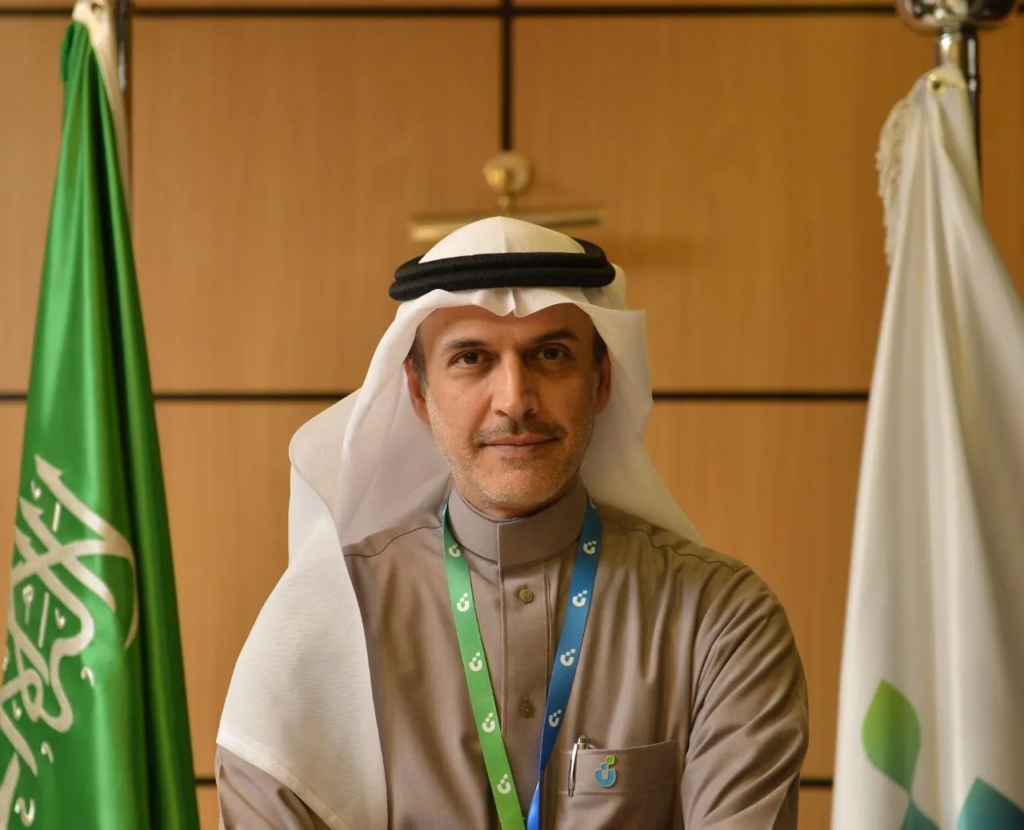
Financial institutions create greater impact when capital, technology and execution work as one system.
A Portfolio Perspective on Capital
Alrashid’s profile also highlights experience managing a SAR20 billion investment portfolio comprising multi-asset internal and external investments, with an average growth rate of 9% per annum stated in the profile.
This adds another dimension to his leadership profile.
Investment management requires decisions about allocation, risk and performance across different assets and opportunities. At executive level, that perspective can influence how leaders think about resources more broadly: where capital should be directed, how risk should be understood and how long-term value should be assessed.
For an executive whose career spans technology, finance and transformation, capital is therefore not merely a financial instrument. It becomes one part of a wider system for achieving institutional objectives.
The Executive Value of Cross-Sector Experience
One of the defining characteristics of Alrashid’s career is its breadth.
He has worked across private-sector banking, consulting, professional services, government programmes, development finance and startups. His profile also notes board memberships across government, private and listed entities.
That variety creates exposure to very different forms of decision-making.
A technology executive must think about systems and delivery. A banking leader must consider risk and financial performance. A government programme requires institutional coordination. A CEO must ultimately bring these perspectives together and establish priorities for the organisation as a whole.
The ability to move between these environments is increasingly relevant to modern executive leadership, particularly as technology, finance and economic development become more closely connected.
Leadership Through Systems Thinking
Systems analysis is among Alrashid’s listed areas of expertise, and the concept provides a useful lens through which to understand his career.
His experience repeatedly places him in environments where individual functions cannot be considered independently.
Banking technology affects customer experience and operational efficiency. Credit risk influences access to finance. Enterprise systems affect how organisations execute strategy. Investment decisions influence the allocation of resources. Government programmes depend on coordination between institutions and stakeholders.
This interconnectedness is central to transformation.
The challenge for a transformation-focused leader is therefore not simply to introduce a new technology or process. It is to understand how a change in one part of an organisation affects the wider system.
That perspective has remained visible across Alrashid’s progression from technology leadership to CEO roles.
A Foundation Built on Technology and Business
Alrashid holds a Master’s degree in Computer Science from the Florida Institute of Technology, completed between 1999 and 2002.
His academic foundation in computer science is complemented by a career that moved progressively closer to business and institutional leadership.
That combination helps explain the breadth of his professional profile. He has been able to operate within technical environments while developing responsibility for financial performance, business transformation and organisational leadership.
The result is not simply a technology executive who moved into management. It is a broader leadership profile shaped by the relationship between technology, finance and institutional performance.
Leadership With a Wider Mandate
Alrashid’s current position at SME Bank represents another stage in a career defined by expanding responsibility.
From consulting and eGovernment to senior technology roles at Al Rajhi Bank, from professional services and development finance to leading the Social Development Bank and now SME Bank, his career has consistently moved towards larger institutional mandates.
The common thread is transformation.
Whether the challenge involves technology infrastructure, financial systems, business development, credit or institutional strategy, the underlying task remains the same: creating organisations that can perform effectively in changing environments.
The measure of transformation is not the scale of change introduced, but the capability an institution gains from it.
Recognition by The CEO Network
The CEO Network recognises Ibrahim Alrashid for a career that brings together technology, finance, transformation and institutional leadership across some of Saudi Arabia’s significant business and development environments.
His experience spans 28 years and includes leadership positions across banking, government, professional services, development finance and SME banking. His work managing a substantial multi-asset investment portfolio, his senior technology leadership at Al Rajhi Bank, and his CEO roles at the Social Development Bank and SME Bank demonstrate the breadth of his professional contribution.
At the centre of that journey is a consistent interest in transformation: understanding how systems, capital, technology and people can be brought together to strengthen institutions and expand their ability to create meaningful economic value.
For today’s executive environment, that cross-disciplinary perspective is increasingly important. The organisations capable of adapting effectively are often those led by people who understand not only individual functions, but how those functions work together.