





















Now Reading: Revolut Finally Wins Full UK Banking Licence After Five-Year Wait—What It Means for Fintech
-
01
Revolut Finally Wins Full UK Banking Licence After Five-Year Wait—What It Means for Fintech
Revolut Finally Wins Full UK Banking Licence After Five-Year Wait—What It Means for Fintech
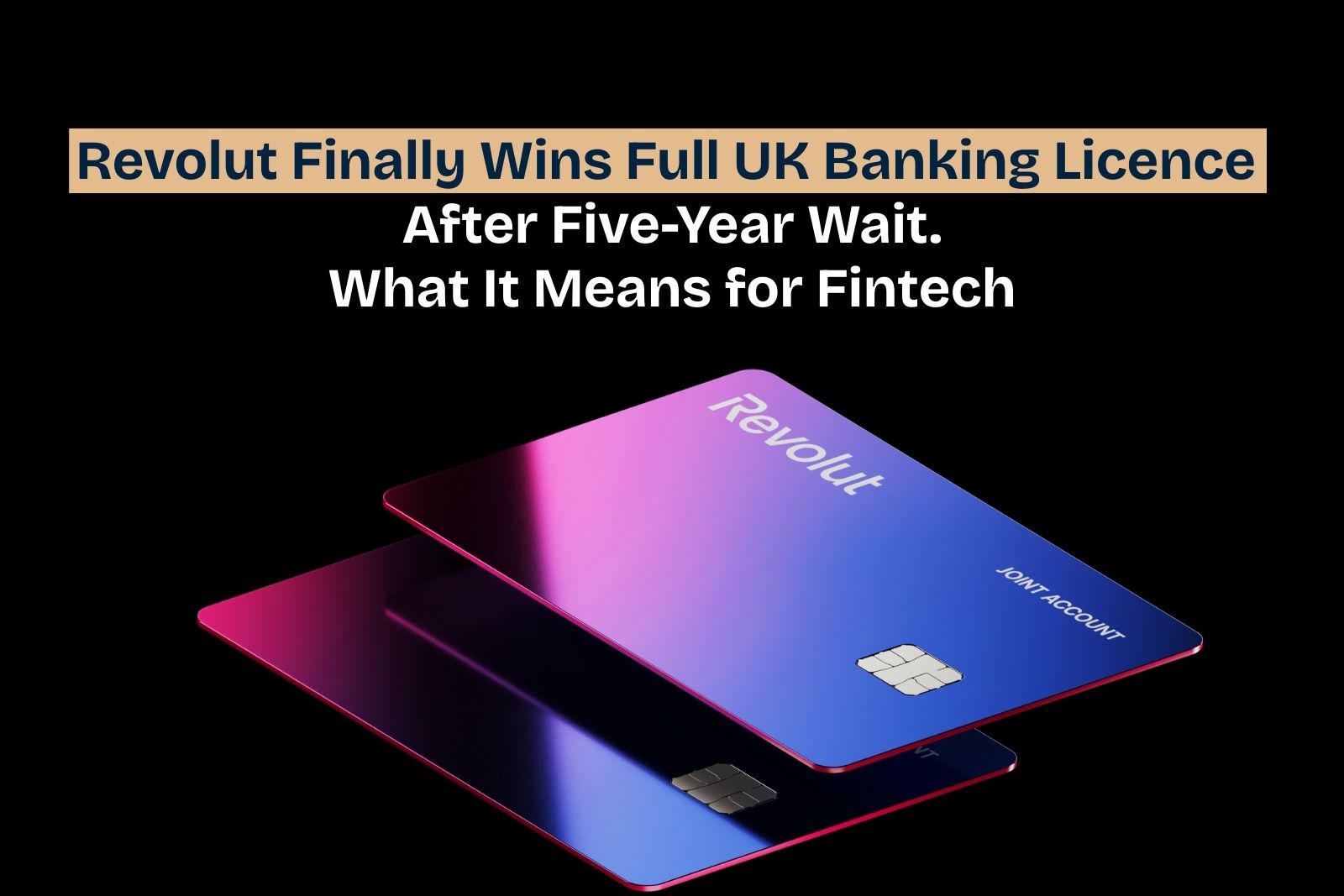
After a five-year regulatory odyssey, Revolut has achieved what few fintechs have managed: a full UK banking licence. The Prudential Regulation Authority’s decision to lift restrictions on Revolut’s banking licence, moving it from “mobilisation” phase to full authorisation, marks a watershed moment for the digital banking pioneer and the broader fintech industry . The approval paves the way for Revolut to offer lending products and expand its UK operations, potentially reshaping the competitive landscape for British banking.

The long road to approval
Revolut first applied for its UK banking licence in 2021, seeking to transform from a payments app into a fully regulated bank. The company entered the “mobilisation” phase in July 2024—a restricted licence allowing limited operations while building necessary systems and controls .
The five-year timeline reflects both Revolut’s complex business model and the PRA’s heightened scrutiny of fintech applicants following several high-profile challenges in the sector. Questions about governance, compliance systems, and audit processes extended the review period well beyond initial expectations.
What the licence enables
With restrictions lifted, Revolut Bank UK Ltd can now :
- Offer lending products including personal loans, overdrafts, and eventually mortgages
- Accept larger deposits without the previous restrictions
- Build a balance sheet that supports more sophisticated financial services
- Reduce reliance on partner banks for core banking functions
The company stated that approval “paves the way for a wider range of services in the future, including lending and other products” .
Why this matters for Revolut
The UK represents Revolut’s largest and most mature market, with millions of customers who have used the app for payments, currency exchange, and budgeting tools. Until now, however, Revolut operated in the UK as an e-money institution rather than a full bank—a distinction that limited its product suite and required partnerships with licensed banks for certain services.
Full banking status enables Revolut to:
- Capture lending margins rather than referring loan demand to partners
- Deepen customer relationships through integrated current accounts and credit products
- Improve unit economics by reducing third-party fees
- Enhance credibility with customers and regulators globally
The licence also supports Revolut’s broader international ambitions. UK approval often signals regulatory sophistication that facilitates licensing in other jurisdictions.

Implications for UK banking
Revolut’s entry as a fully licensed bank intensifies competition in a market already transformed by digital challengers. Unlike newer entrants, Revolut brings an existing base of millions of active users—many of whom already use Revolut for daily spending and international transfers.
Traditional banks face pressure on multiple fronts:
- Current accounts: Revolut can now offer fully-featured bank accounts with overdrafts, potentially displacing primary banking relationships
- Consumer lending: Revolut’s data-rich platform may enable more sophisticated credit underwriting
- Cross-border services: Revolut’s FX capabilities remain a differentiator against incumbents with legacy systems
For incumbent banks, the response will likely involve accelerating digital transformation, defending relationship-based products like mortgages, and leveraging their own regulatory capital advantages.
The broader fintech signal
Revolut’s licensing success sends positive signals across the fintech ecosystem :
- Regulatory path clarity: The approval demonstrates that full banking licences are achievable for digital-first firms, though the timeline remains lengthy
- Incumbent validation: Traditional banks gain a regulated competitor, potentially justifying their own digital investments
- Investor confidence: The licence removes a key overhang that had concerned Revolut investors
- International template: Revolut’s approach could guide other fintechs seeking regulated status
However, the five-year timeline also highlights the challenges of fintech regulation. Startups must balance growth ambitions with the compliance investments and patience required for regulated status.
Challenges ahead
Licensing represents a beginning, not an end. Revolut now faces :
- Capital requirements: As a regulated bank, Revolut must maintain higher capital ratios, potentially constraining growth investments
- Supervisory oversight: Ongoing PRA supervision adds compliance complexity
- Lending risk: Entering credit markets requires underwriting expertise Revolut has not previously demonstrated
- Profitability pressure: Banking margins differ from payments economics, requiring business model adaptation
The company must also navigate macroeconomic uncertainty, with UK interest rates potentially affecting lending demand and credit quality.
What this means for customers
For Revolut’s 45 million global customers, particularly those in the UK, the licence unlocks :
- Deposit protection: Full FSCS coverage up to £85,000 for eligible deposits
- Integrated lending: Loans and overdrafts within the familiar Revolut app
- Expanded services: Potential for mortgages, savings products, and investment accounts
UK customers who previously used Revolut alongside traditional bank accounts may now consolidate more of their financial lives within the platform.
Competitive responses
Rivals are unlikely to stand still. Monzo and Starling—already licensed UK banks—will defend their positions through product innovation. Traditional banks like Barclays, Lloyds, and HSBC will emphasize their full-service capabilities and branch networks. And new challengers may accelerate their own licensing applications, hoping to replicate Revolut’s trajectory.
What to watch next
- Revolut’s lending products: timing, pricing, and underwriting approach
- Customer adoption of Revolut as a primary banking relationship
- Financial results revealing lending margins and credit performance
- International expansion leveraging UK regulatory credibility
Conclusion
Revolut’s full UK banking licence represents both a culmination and a beginning. After five years of regulatory navigation, the company finally achieves the status its founders envisioned. But with status comes responsibility—capital requirements, supervisory scrutiny, and the challenge of building a profitable lending business from scratch. For the UK banking industry, Revolut’s entry as a regulated incumbent accelerates the digital transformation that has reshaped financial services over the past decade. Customers gain more choice, incumbents face more competition, and the line between fintech and bank blurs further. The question now is whether Revolut can translate licence into lending success—and whether other fintechs will follow its hard-won path.