
















Now Reading: Meta Plans 20% Workforce Reduction as AI Reshapes Tech Employment—What It Signals for the Industry
-
01
Meta Plans 20% Workforce Reduction as AI Reshapes Tech Employment—What It Signals for the Industry
Meta Plans 20% Workforce Reduction as AI Reshapes Tech Employment—What It Signals for the Industry
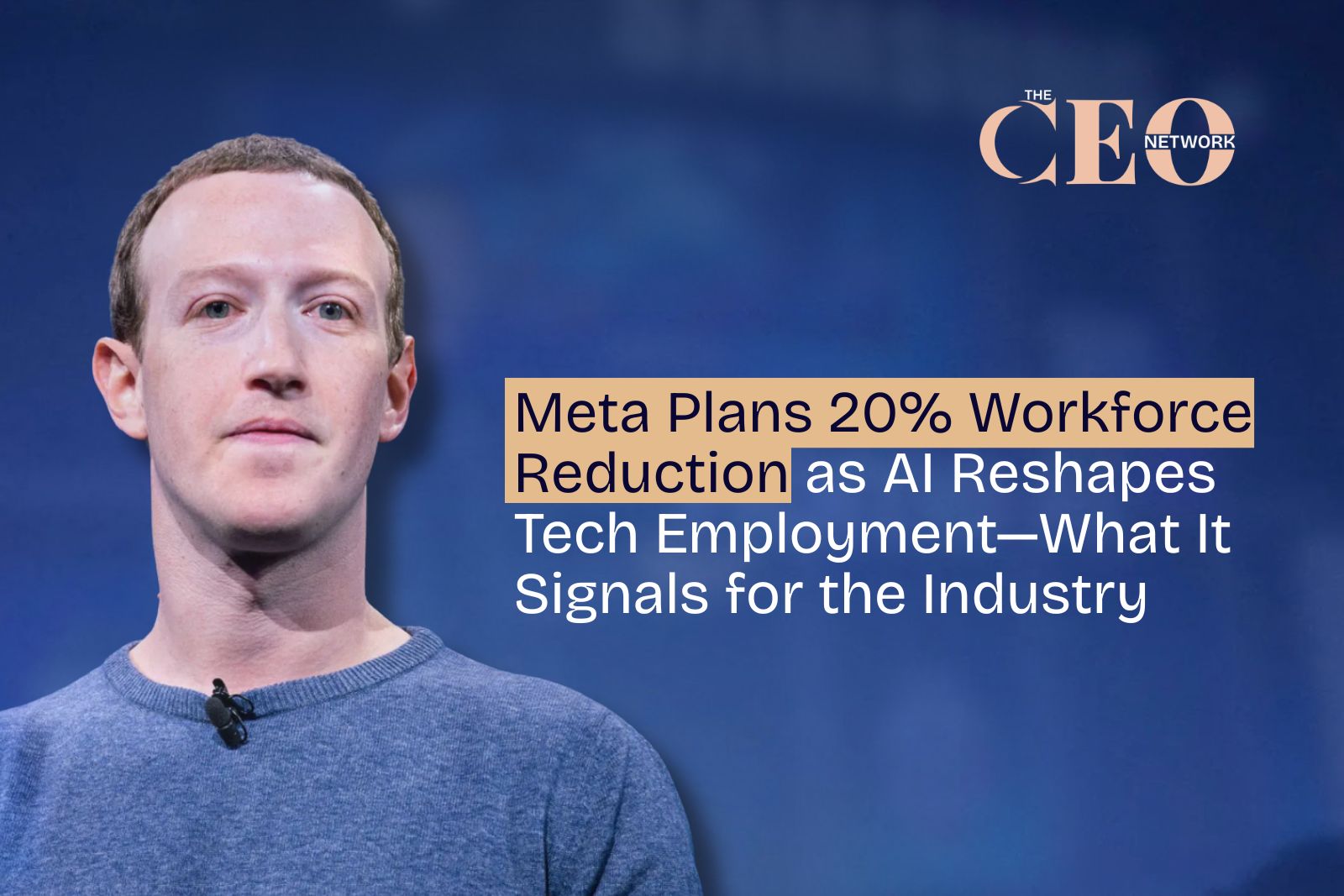
Meta Platforms is reportedly planning to cut 20% or more of its workforce, according to Reuters, in a move that would represent one of the largest corporate reductions in technology sector history . The layoffs, aimed at offsetting massive AI infrastructure investments and preparing for efficiency gains from AI-assisted workers, signal a fundamental shift in how technology companies view employment in an era of accelerating automation.
The scope of planned reductions
While final decisions on timing and scale remain under discussion, a 20% reduction would affect tens of thousands of employees. Meta employed approximately 72,000 people as of recent filings, suggesting potential cuts exceeding 14,000 positions .
The company has not officially confirmed the report, but the scale aligns with CEO Mark Zuckerberg’s previous declarations of 2026 as a “year of efficiency” and his emphasis on leaner operations powered by artificial intelligence.
Why Meta is cutting deep
Multiple factors drive Meta’s workforce planning :
- AI infrastructure costs: The company is investing billions in AI chips, data centers, and research—capital expenditures that require offsetting operational savings
- AI productivity gains: Meta believes AI-assisted workers can accomplish more with smaller teams, reducing required headcount
- Advertising slowdown: Digital ad market maturation limits revenue growth, pressuring margins
- Metaverse losses: Reality Labs continues burning cash with extended timelines for returns
The layoffs follow similar announcements from Amazon and Block earlier this year, suggesting a pattern among tech giants reassessing workforce needs in light of AI capabilities .
The AI efficiency thesis
Meta’s rationale reflects a broader industry belief that AI fundamentally changes the relationship between headcount and output. If AI coding assistants, automated content moderation, and generative AI tools make each employee more productive, companies can maintain or increase output with fewer people.
This thesis extends beyond Meta. The UBS Global Entrepreneur Report found that nearly two-thirds of business owners expect AI to boost efficiency and automation over five years . For technology companies specifically, the potential impact is magnified—AI can automate tasks from software development to customer support to marketing.
Market reaction
Investors initially responded positively to the layoff news, with Meta shares gaining 3% in premarket trading . The reaction suggests markets view workforce reductions as prudent cost management rather than signs of distress—at least for companies with strong competitive positions.
However, the long-term implications are more complex. If AI truly enables dramatic productivity gains, tech company employment may never return to peak levels, even as revenues grow. The industry that created millions of knowledge-worker jobs could become a net reducer of employment.
Broader tech industry context
Meta’s planned cuts reflect several intersecting trends across technology :
- AI infrastructure concentration: Five US hyperscalers will spend $650-700 billion on AI infrastructure in 2026 alone—a 60% increase from 2025. These investments require funding from operational efficiencies.
- Autonomous systems scaling: Waymo targets 1 million weekly robotaxi rides by year-end. Tesla plans services in 30+ cities. Uber expects autonomous rides in 15 global cities. Each autonomous deployment reduces human-dependent operations.
- Industrial automation acceleration: 65% of enterprises expect increased autonomous mobile robot deployment. Labour constraints and reshoring pressures create structural automation demand.
What this means for tech workers
For technology professionals, the implications are significant :
- Skills obsolescence: Roles focused on repetitive tasks face highest replacement risk
- AI literacy requirement: Understanding and leveraging AI tools becomes table stakes
- Value shift: Workers judged increasingly by how they amplify AI rather than perform tasks
- Job restructuring: Fewer positions overall, but higher value for remaining roles
The UBS survey highlighted adoption challenges—nearly half of respondents struggle to find workers with AI technical expertise . This suggests that while AI may reduce total headcount, demand for specialized AI skills remains intense.
Regulatory and societal implications
Large-scale tech layoffs raise questions beyond individual companies :
- Workforce transition: What happens to displaced workers in an industry with fewer net positions?
- AI governance: Gartner warns that misconfigured AI could shut down national critical infrastructure in a G20 country by 2028—systemic risks accompany AI integration
- Concentration effects: As AI capabilities concentrate among fewer companies and workers, economic power consolidates
The EU AI Act’s high-risk provisions, taking effect this year, impose transparency, governance, and data-quality mandates that may influence how companies implement AI-driven workforce changes .
What this signals for other industries
Meta’s workforce strategy matters beyond technology. As the UBS survey indicates, entrepreneurs across sectors expect AI to drive efficiency . If tech companies—the most AI-sophisticated organizations—reduce headcount significantly, other industries may follow similar patterns as AI tools mature.
Manufacturing, financial services, professional services, and media all face potential restructuring as AI capabilities expand. The difference is timeline, not direction.
What to watch next
- Official Meta announcement confirming or clarifying layoff scope
- Severance and transition support details, signaling how Meta manages workforce impact
- Similar announcements from other tech companies, indicating industry-wide pattern
- Union or regulatory responses, particularly in Europe with stronger worker protections
- Productivity metrics revealing whether AI actually enables output maintenance with fewer workers
Conclusion
Meta’s reported plan to cut 20% of its workforce represents more than corporate cost-cutting—it signals a fundamental reassessment of the relationship between employment and output in an AI-enabled world. If one of the world’s most sophisticated technology companies believes it can operate with substantially fewer people, the implications extend across the global economy. For workers, the message is clear: AI literacy and the ability to work alongside intelligent systems will determine employability. For business leaders, the question is whether to lead or follow in restructuring for AI efficiency. And for society, the challenge is managing a transition that could reduce employment in sectors that have historically generated middle-class jobs. Meta’s layoffs, if confirmed, will be only the beginning of a much larger conversation about work, value, and prosperity in the age of AI.