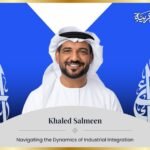

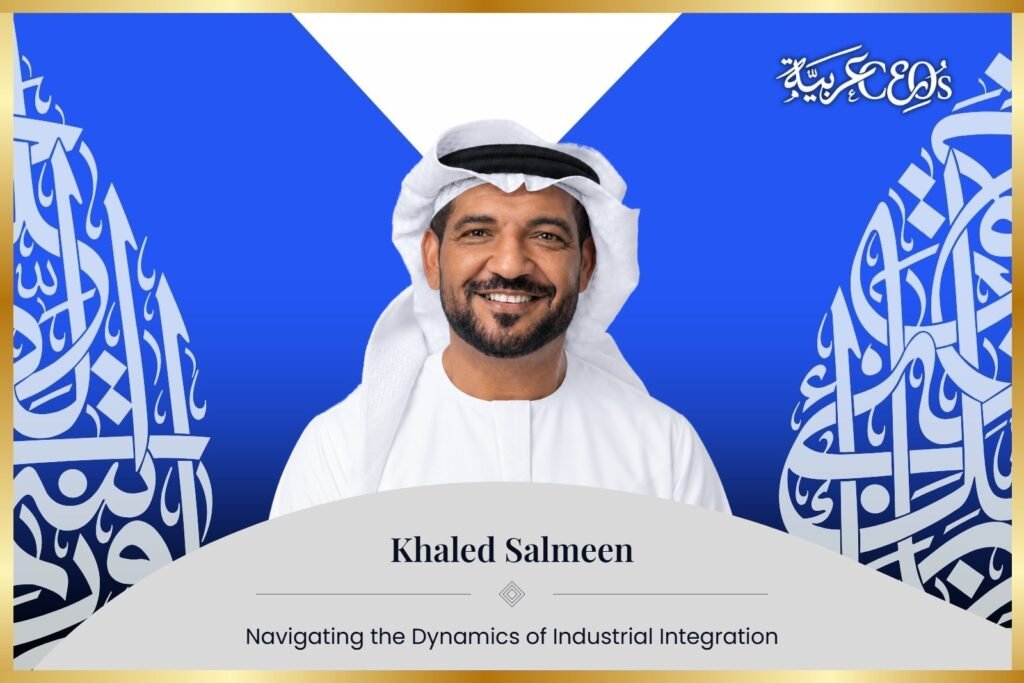



Now Reading: Khaled Salmeen: Navigating the Dynamics of Industrial Integration
-
01
Khaled Salmeen: Navigating the Dynamics of Industrial Integration
Khaled Salmeen: Navigating the Dynamics of Industrial Integration
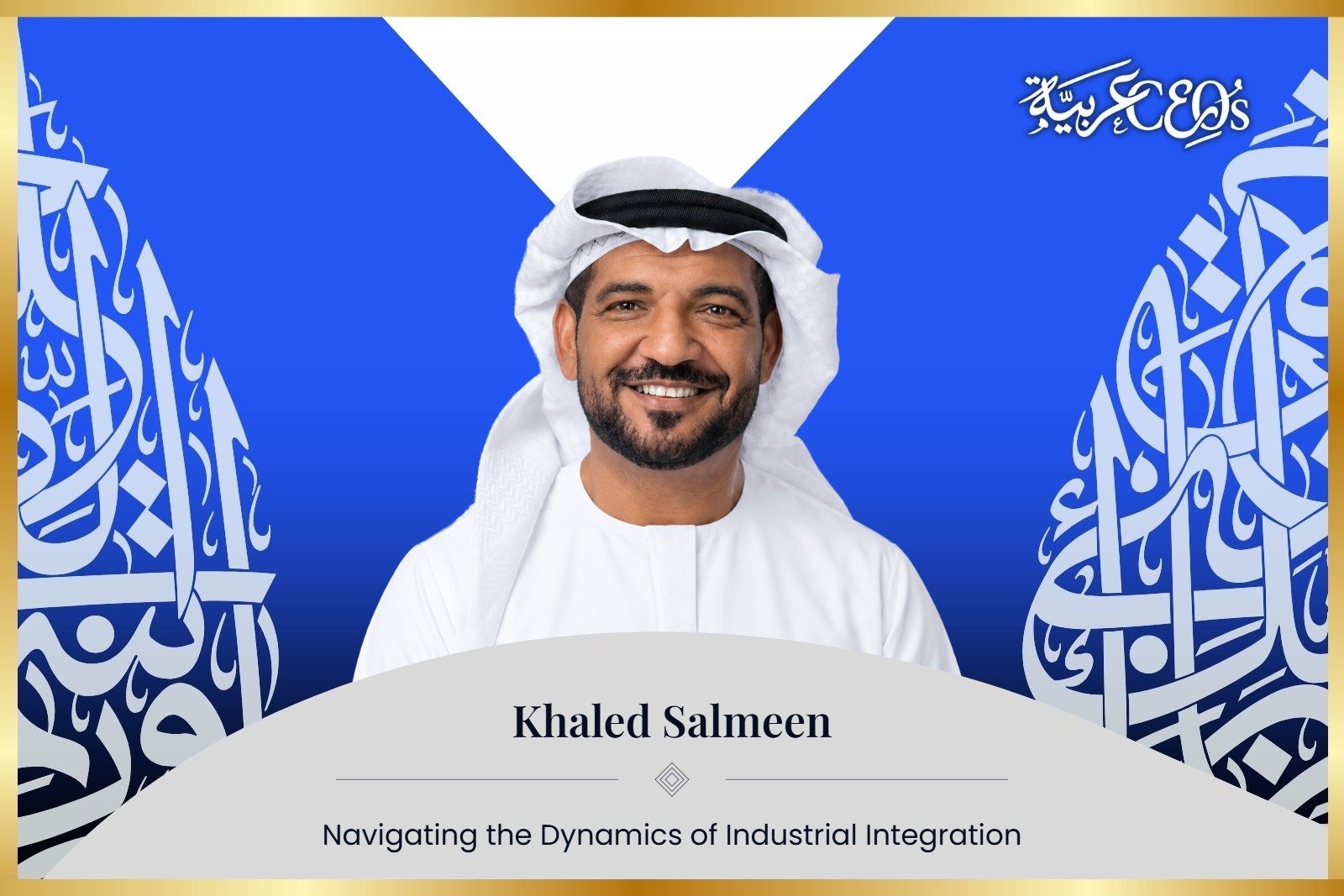
For Khaled Salmeen, the measure of industrial success in the United Arab Emirates is rooted in a fundamental principle: natural resources must yield greater value through national diversification and the ongoing development of local human capital. With three decades of professional experience, he integrates the precision of engineering with the logic of financial management to oversee large-scale industrial portfolios.
His professional philosophy is built upon the requirement that all strategic decisions must possess clear business logic and must consistently add up, ensuring that every project contributes to the broader national objective.
Bridging Infrastructure and Commerce
As the Executive Director, Downstream Industry, Marketing and Trading at the Abu Dhabi National Oil Company (ADNOC), Salmeen oversees a complex mandate. This role encompasses the growth of refining and petrochemical operations, the development of the Ta’ziz Industrial ecosystem in Ruwais, and the evaluation of new opportunities in hydrogen production. He is also charged with the oversight of strategic overseas storage and the enhancement of the company’s global presence through ADNOC Marketing International.
His approach recognises that modern energy leadership requires more than resource extraction. By bringing downstream assets closer to global customers, he fosters a commercial, market-focused organisation capable of responding rapidly to fluctuating international dynamics. This integration is essential for maintaining the nation’s competitive stance on the global stage.
The directorate continuously works to create a commercial, market-focused environment where new opportunities are identified and captured with speed, ensuring that ADNOC remains a catalyst for economic growth in the region for many decades to come.
True industrial resilience is built by ensuring that long-term strategic infrastructure remains fundamentally aligned with the immediate, changing requirements of the global customer.
The Logic of Integrated Planning
Before his executive tenure at ADNOC, Salmeen spent a decade as CEO and Managing Director of the Khalifa Industrial Zone Abu Dhabi (Kizad), where he developed the strategic plan and brand identity. During this period, he oversaw the master planning and infrastructure development from its inception. He initiated over 30 development programs to prepare for the regional and international launch of the zone, demonstrating an ability to manage national-level projects from initial concept to operational reality.
These efforts attracted interest from over 800 investors and leads, resulting in the leasing of over 37 million square feet of land with a revenue yield exceeding AED 5 billion, consistently surpassing business plan targets. Furthermore, he successfully oversaw the utilisation of Khalifa Port in both container volumes and general cargo. During this intensive decade of growth, he consistently achieved remarkable savings in the operational expenditure budget, proving that large-scale infrastructure expansion can be paired with financial discipline.
Prioritising National Human Capital
Beyond physical infrastructure, Salmeen has consistently focused on the professional growth of the national workforce. During his leadership at Kizad, he quadrupled the number of UAE Nationals within the organisation and doubled the Tawteen percentage within three years, ensuring it exceeded 40 per cent. This was supported by the introduction of an innovative development program designed to equip local professionals with necessary technical, business, and interpersonal skills.
This commitment to talent was not an isolated effort. During his time at Borouge, he served as Chairman of the National Development Committee, overseeing over 85 UAE national graduate developees and trainees. By prioritising such programs, he ensures that industrial progress is met with local capability, creating a sustainable legacy of expertise that is critical for the long-term success of the nation’s largest industrial enterprises.
Complex industrial challenges are best resolved when organisational objectives are underpinned by a transparent and disciplined financial foundation.
Operational Rigour and Financial Clarity
His perspective is grounded in a career that began in petrochemical operations at Borouge and progressed through significant roles at Tabreed and Masdar. While serving as Chief Operating Officer at Tabreed, he managed capital expansion projects exceeding AED 6 billion and directed a successful plant profitability improvement program. This role involved managing around 380 employees across operations, maintenance, business development, and engineering, while ensuring all work procedures adhered to high safety and quality standards.
These roles demanded a focus on both technical reliability and commercial accountability. Today, as a member of multiple boards including ADNOC Logistics and Services, ADNOC Refining, ADNOC Distribution, ADNOC Global Trading (AGT), ADNOC Trading (AT), and ICE Futures Abu Dhabi (IFAD), he applies this same business logic to ensure that large-scale operations maintain both high safety standards and commercial performance.
This exposure to diverse financial and investment fields gives him an acute business logic and a sharp sense of what works, which he applies to his daily decision-making processes.
Recognition by The Arab CEOs
Khaled Salmeen demonstrates the effectiveness of applying rigorous engineering and financial analysis to board-level decision-making. His tenure across some of the most critical energy and infrastructure entities in the United Arab Emirates highlights the importance of strategic continuity in managing national-scale assets. His experience managing multi-billion dirham investments, from district cooling plants to major port and energy terminals, reflects a career defined by operational and financial precision.
By balancing the operational demands of refining, logistics, and trading with a clear commitment to local talent development, he provides a model for sustainable industrial leadership. His work serves as an essential contribution to the long-term economic and human development goals of the region, ensuring that the country’s natural resources are transformed into lasting national value.