













Now Reading: Turning the Tide: Why 2026 is the Decision Year for the ‘Greening of Global Shipping’
-
01
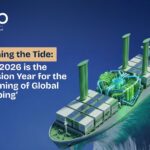
Turning the Tide: Why 2026 is the Decision Year for the ‘Greening of Global Shipping’
Turning the Tide: Why 2026 is the Decision Year for the ‘Greening of Global Shipping’
Introduction
The maritime industry is the invisible engine of the global economy, moving over 80% of the world’s trade. However, it is also a massive environmental outlier, contributing roughly 3% of all global greenhouse gas emissions—a footprint equivalent to that of a major industrial nation like Germany. For years, “green shipping” was a peripheral ESG talking point. But in 2026, a collision of aggressive carbon taxation, new fuel technologies, and strict international mandates has transformed decarbonization from a moral choice into a core requirement for commercial survival.
What’s the new move?
While the last three years were characterized by pilot projects and “green corridors,” 2026 marks the year of continuous operational compliance. As of January 1, 2026, the International Maritime Organization (IMO) officially entered the “Phase 2” revision of its Carbon Intensity Indicator (CII), making carbon efficiency a live financial variable for every vessel over 5,000 GT.
At the corporate level, industry leader Maersk is completing the delivery of six additional 17,000 TEU dual-fuel methanol vessels this year, bringing its total green-capable fleet to 25. Simultaneously, 2026 has seen the first full-scale commercial deployment of e-Methanol bunkering infrastructure in major hubs like Singapore and Rotterdam, finally bridging the gap between “green-ready” ships and actual green operations.
Why the sudden acceleration? The key drivers
- The 100% EU ETS Phase-In: As of January 1, 2026, the European Union’s Emissions Trading System (EU ETS) has reached its final phase-in. Shipping lines must now account for 100% of their emissions (up from 70% in 2025) for voyages within the EU. This has caused emissions surcharges to spike, forcing CEOs to choose between green fuels or massive margin erosion.
- FuelEU Maritime Implementation: 2026 is the first reporting year for the FuelEU Maritime regulation, which mandates a decrease in the greenhouse gas intensity of energy used on board. Unlike previous goals, this regulation carries severe financial penalties for non-compliance, payable directly to the “Green Shipping Fund.”
- The “Scope 3” Mandate: Retail giants like Amazon, IKEA, and Walmart are no longer accepting “carbon-heavy” shipping. In 2026, these companies are enforcing strict Scope 3 targets, effectively de-listing carriers with poor CII ratings (D or E) from their primary logistics contracts.
By the numbers: The economic shift
- $7.57 Billion: The projected global market size for green methanol ships in 2026, as the industry moves from experimental builds to standard procurement.
- 25.39%: The projected Compound Annual Growth Rate (CAGR) for the green shipping market through 2034, driven by the replacement of aging, inefficient hulls.
- €76.75: The average price per ton of CO2 (European Union Allowance) in early 2026, which has now been fully integrated into maritime freight rates as a standard “Emission Surcharge.”
Implications for the broader ecosystem
For global CEOs, the 2026 maritime shift means that the era of “cheap” high-carbon logistics is over. Shipping is no longer a commoditized service; it is a high-stakes data game. Carriers with “A” or “B” CII ratings are now commanding a “Green Premium” in charter rates, while inefficient vessels are becoming “stranded assets” that are increasingly difficult to finance or insure.
The success of the 2026 regulatory framework is also triggering a massive restructuring of global bunkering maps. We are seeing a capital flight away from traditional fossil-fuel hubs toward regions with high renewable energy capacity—such as the Middle East and Northern Europe—which are becoming the new “green gas stations” of the sea. Leaders in manufacturing and retail must now audit their entire supply chain, or risk being priced out of the market by competitors who secured green freight capacity early.