



Now Reading: From Linear to Circular: The 2026 Supply Chain Revolution and Why CEOs Must Lead the Pivot
-
01
From Linear to Circular: The 2026 Supply Chain Revolution and Why CEOs Must Lead the Pivot
From Linear to Circular: The 2026 Supply Chain Revolution and Why CEOs Must Lead the Pivot
Introduction
For decades, global businesses operated on a “take-make-dispose” model, a linear path that maximized short-term efficiency but created massive resource vulnerabilities and waste streams. By 2024, the limitations were clear, and 2025 saw a wave of ambitious pilot programs. Now, in 2026, the era of exploration is over. This is the year when the circular economy has moved from a theoretical corporate goal to a primary driver of supply chain stability, profit, and customer loyalty.
The Core Strategic Shift
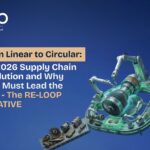
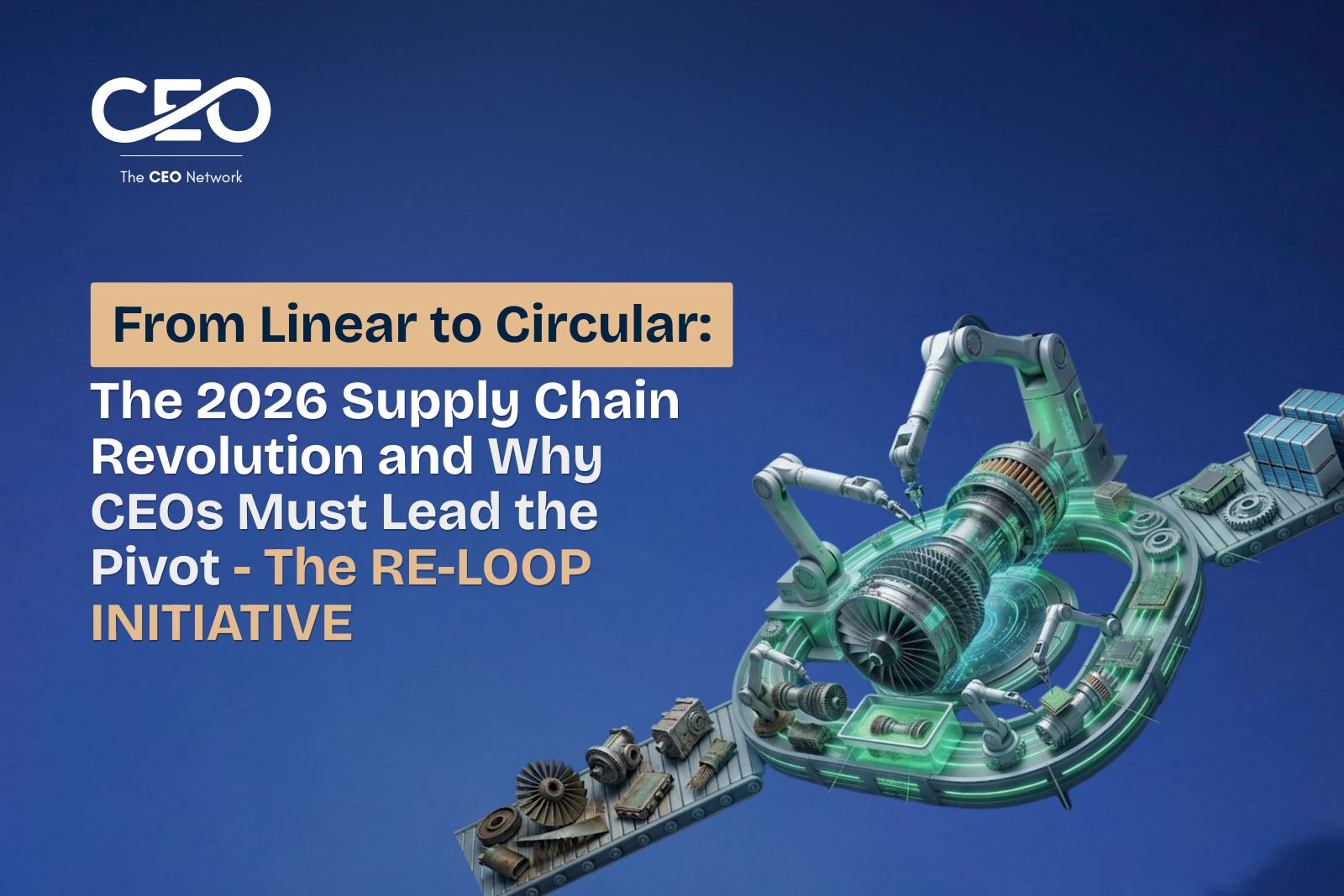
What’s the new move? It’s not just about increased recycling rates. Leading businesses are aggressively re-engineering their entire product life cycle to ensure resources stay within the loop. The most advanced companies are implementing “Modular-by-Design” principles and dedicated “Remanufacturing as a Service” (RaaS) models. This shift, which we are profiling as “The RE-LOOP Initiative,” is decoupling growth from the consumption of finite raw materials.
Why CEOs Need to Act Now
The competitive landscape of 2026 penalizes resource dependency. Key drivers include:
- Global Resource Security: Geopolitical shifts have made the procurement of critical minerals and rare-earth elements more precarious. Internal resource loops provide a reliable, long-term supply chain hedge.
- Regulatory Compliance & Carbon Accounting: New 2026 global carbon border adjustments have placed a premium on low-impact materials. Circular models dramatically reduce the “Scope 3” carbon footprint of raw material extraction.
- The Modular Mandate: Consumers, empowered by “Right to Repair” legislation that matured in 2025, are demanding longer product life. Businesses that design for disassembly and upgradability are winning the battle for customer trust.
Conclusion
The “take-make-dispose” model is no longer a sustainable business practice. The RE-LOOP Initiative demonstrates that for the leading businesses of 2026, profit is now derived from the continuous, intelligent flow of existing material capital, not the continuous extraction of new material capital. This is a foundational strategy for future-proofing your business.